“You are not broken — you are evolved that way.”
Most people go through life confused by their own behavior:
-
“Why do I procrastinate even when I care?”
-
“Why do I lose motivation so fast?”
-
“Why do I feel so affected by rejection?”
-
“Why do I crave validation?”
-
“Why do emotions overpower logic?”
We treat these things like personal weaknesses.
We think something is wrong with us.
But nothing is wrong.
Nothing is broken.
Everything you do — every emotion, hesitation, impulse, fear, craving, reaction — comes from one truth:
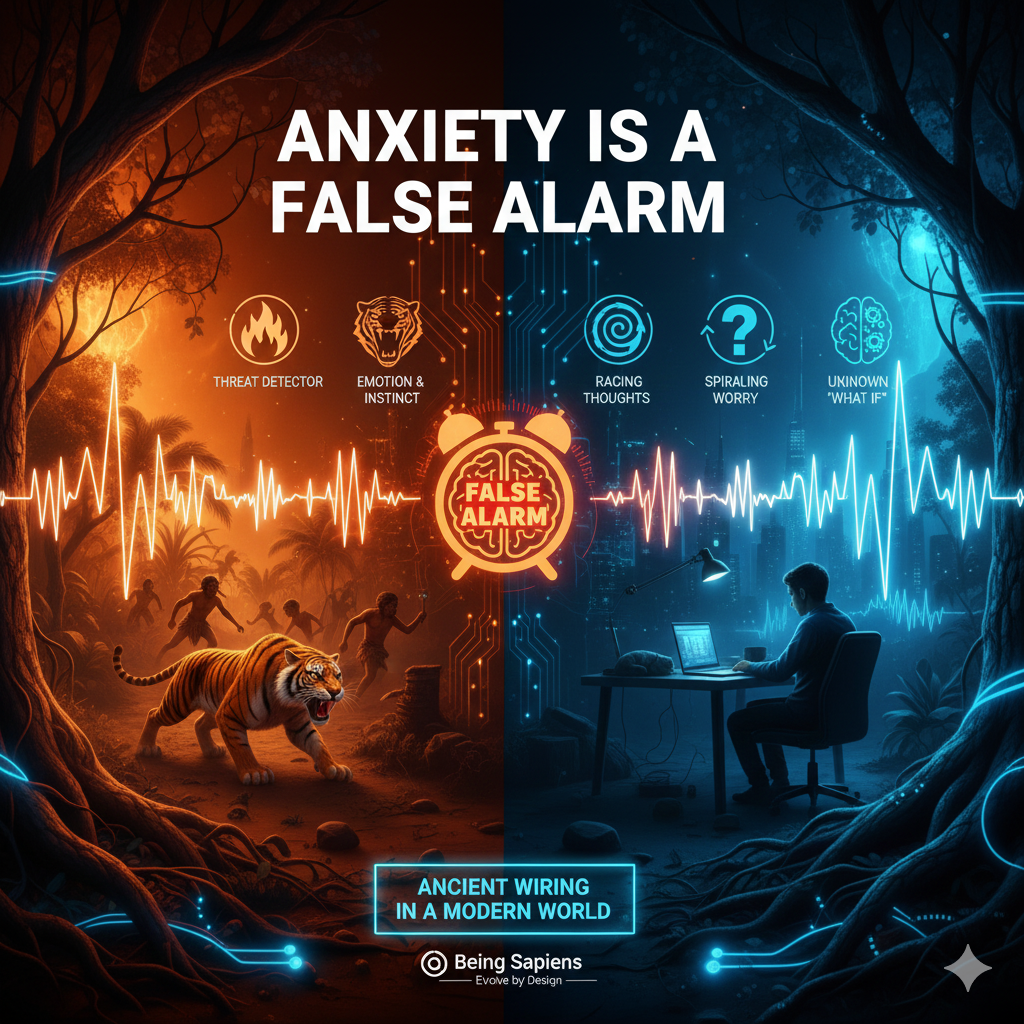
You are an ancient organism living in a modern world.
And your behavior is shaped by evolution, not morality.
To understand yourself, you must understand the three layers of your brain —
each built in different eras of evolution, each with its own priorities.
Let’s break it down using the simplest and most accurate analogy.
🧠 Your Brain Works Like a Company With Three Key Leaders
Inside your mind, you don’t have one brain making decisions.
You have three evolutionary systems stacked together, like layers in a very old company.
Each layer has a different job, different age, and different authority.
Here’s the company structure:
1. The Reptilian Brain — The Old Founder
Role: Survival
Age: 500 million+ years
Authority: Highest
This is the oldest, strictest system.
It has one obsession: keep you alive.
It manages:
-
danger detection
-
energy conservation
-
instinctive reactions
-
fight, flight, freeze
-
hunger, sex, safety
-
survival decisions
This part of your brain built the company and kept it alive for millions of years.
Its philosophy:
“If it kept us alive before, keep doing it.”
It does not trust new ideas easily.
It does not like uncertainty.
It does not like effort.
It does not like risk.
This brain always gets the final vote.
2. The Mammalian Brain — The CEO/Manager
Role: Emotions & Social Survival
Age: ~200 million years
Authority: Second highest
This system evolved when mammals started living in social groups.
Its job is to keep you emotionally safe and socially accepted.
It manages:
-
bonding
-
belonging
-
fear of judgment
-
rejection sensitivity
-
love, jealousy, attachment
-
emotional memories
Its philosophy:
“If you lose the group, you lose survival.”
This is why rejection hurts so deeply.
Why validation feels so good.
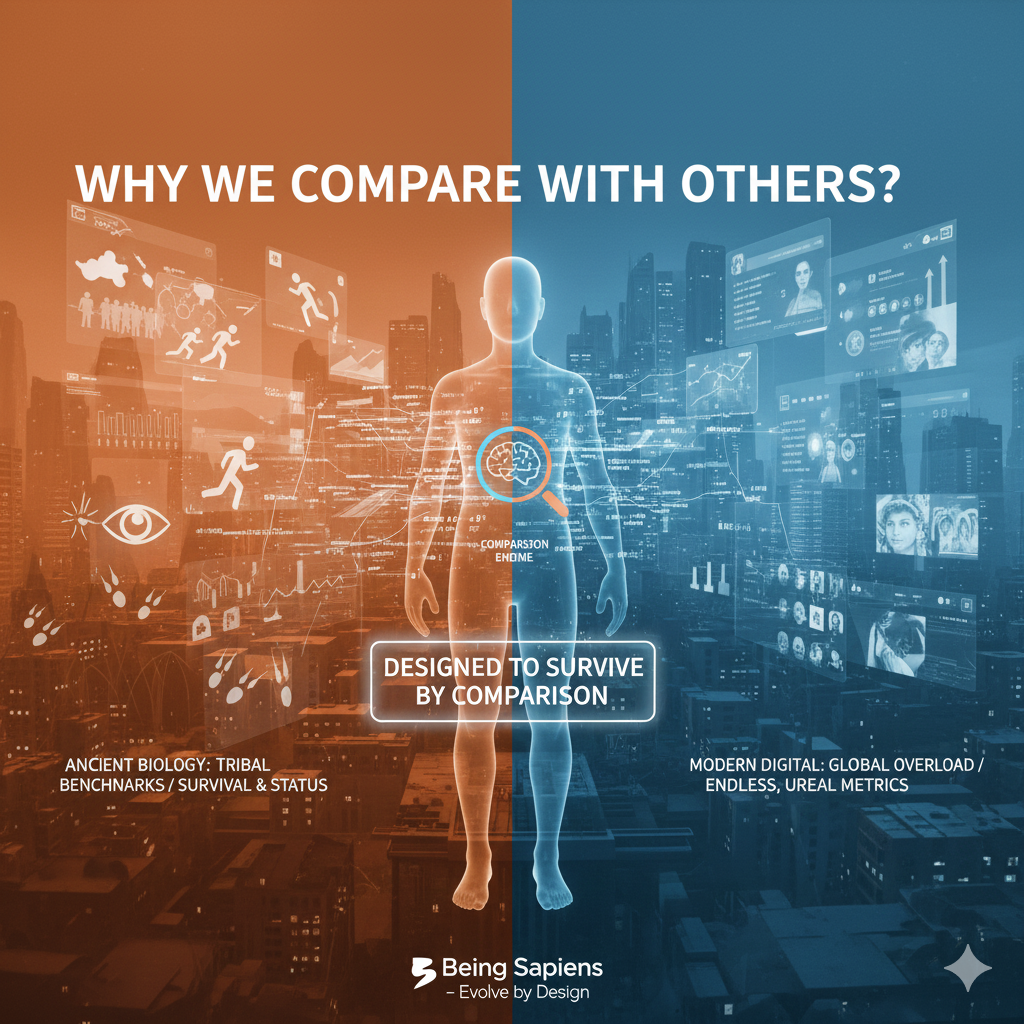
Why comparison is automatic.
Why conflict feels dangerous.
It cares about relationships because group survival = personal survival.
This system reports directly to the founder.
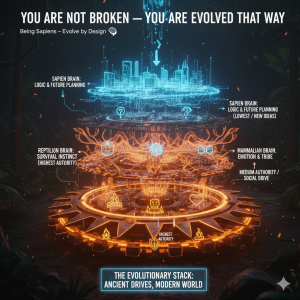
3. The Sapien Brain — The New Intern With Brilliant Ideas
Role: Logic, Planning, Future Goals
Age: ~200,000 years
Authority: Lowest (but most powerful)
This is the youngest and smartest part of your brain.
It gives humans everything that makes us unique:
-
logic
-
planning
-
creativity
-
discipline
-
imagination
-
long-term thinking
-
problem-solving ability
This intern sees the future clearly.
He brings incredible ideas:
-
“Let’s start a business.”
-
“Let’s go to the gym.”
-
“Let’s build a new habit.”
-
“Let’s study and create a better life.”
But here’s the truth:
He has the least authority — not because he is weak, but because he is new.
In the company hierarchy:
-
The founder (Reptilian) has seniority
-
The CEO (Mammalian) manages daily operations
-
The intern (Sapien) must prove his ideas are safe
The Sapien brain is the most intelligent,
but the least trusted during moments of risk, effort, uncertainty, or fear.
💡 Why You Think One Thing but Do Another
Now the real understanding happens.
Your Sapien brain wants:
-
growth
-
discipline
-
achievement
-
future success
Your Mammalian brain wants:
-
approval
-
belonging
-
emotional safety
Your Reptilian brain wants:
-
energy conservation
-
predictability
-
survival
-
zero risk
When you say:
-
“I want to wake up early.”
-
“I want to start working out.”
-
“I want to study today.”
-
“I want to grow, improve, evolve.”
That’s the Sapien brain speaking.
But when you end up doing:
-
delaying
-
over-resting
-
scrolling
-
avoiding
-
sticking to comfort
-
fearing judgment
That’s the older brains overriding the newer one.
Not because the Sapien brain is weak —
but because the older systems outrank it in evolutionary authority.
Their job is not growth.
Their job is survival.
They don’t trust long-term plans unless they feel safe, certain, and energy-efficient.
🧬 Understanding Yourself Makes Everything Easier
Let’s revisit the common struggles:
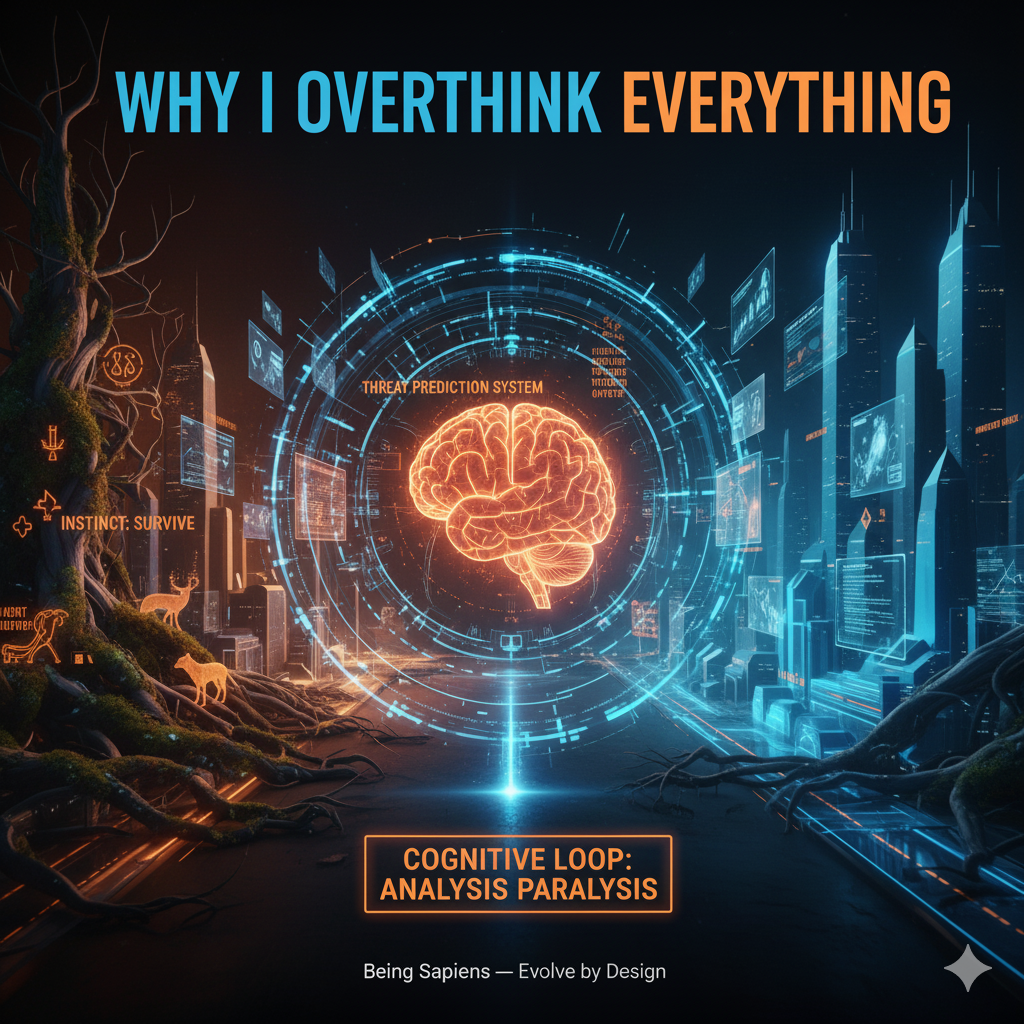
Why do you procrastinate?
The founder says:
“Too much energy. No immediate reward. Not safe.”
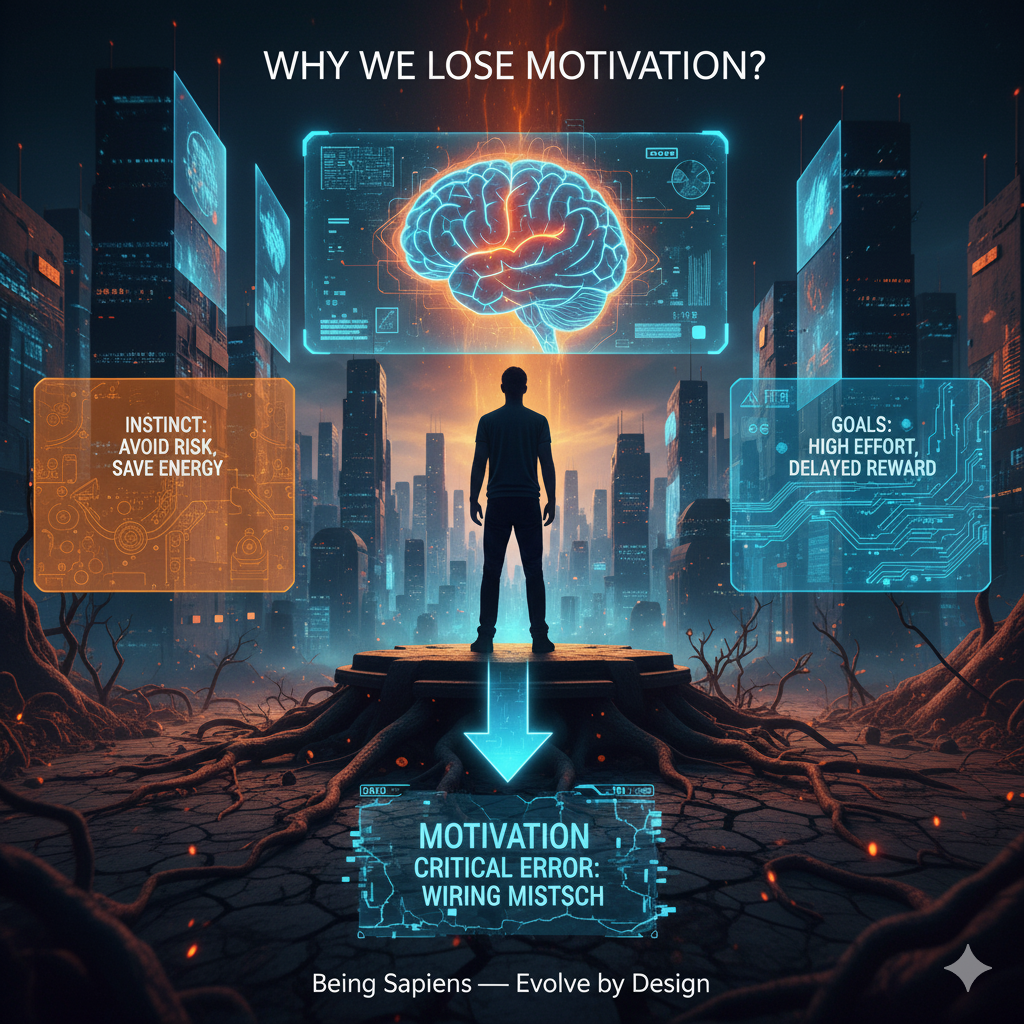
Why does motivation fade?
The intern proposes long-term goals.
The founder approves only short-term gains.
Why does rejection hurt?
The CEO believes rejection = threat to survival.
Why do emotions overpower logic?
Emotions come from older systems with higher authority.
Why is consistency difficult?
Because consistency belongs to the intern.
Safety belongs to the founder.
Guess who wins?
The moment you understand this hierarchy, you stop blaming yourself and start understanding your design.
You realize:
-
You’re not inconsistent — your brains have different agendas.
-
You’re not weak — your instincts are ancient.
-
You’re not confused — you’re layered.
-
You’re not broken — you’re evolved.
This is not psychology.
This is biology + evolution.
Sapiens Reflection
You are not one mind —
you are a team of three evolutionary systems negotiating for control.
The ancient ones prioritize your survival.
The modern one prioritizes your future.
When you finally understand how these systems interact,
you stop fighting yourself and start working with your biology.
This is where real evolution begins.
This is how you Evolve by Design.